



We rely on our water heaters every single day for cooking, cleaning, and comfortable showers. Because these units work silently in the background, it is easy to forget about them until you are suddenly hit with an ice-cold shower.
When your water heater starts acting up, it usually gives you warning signs. Recognizing these symptoms early can save you from a major plumbing emergency, catastrophic water damage, or a massive energy bill. Here is a breakdown of the most common water heater issues, what causes them, and what you should look out for.
1. Unexplained Leaks and Pooling Water
The Symptoms: You notice puddles of water around the base of the tank, moisture running down the sides of the unit, or rust crusting around the pipe connections.
The Problem: Leaks can originate from a few different places. If the leak is coming from above the heater, it might be a loose plumbing connection or a failing valve, which can usually be repaired. If water is dripping from the Temperature & Pressure (T&P) relief valve on the side of the tank, the system may be experiencing dangerous excess pressure. However, if the tank itself is leaking, the inner tank has rusted through. A leaking tank cannot be repaired and requires replacement.
2. No Hot Water
The Symptoms: You turn the handle to hot, but the water remains ice cold no matter how long you let it run.
The Problem: A complete loss of hot water requires different diagnostics depending on your fuel type:
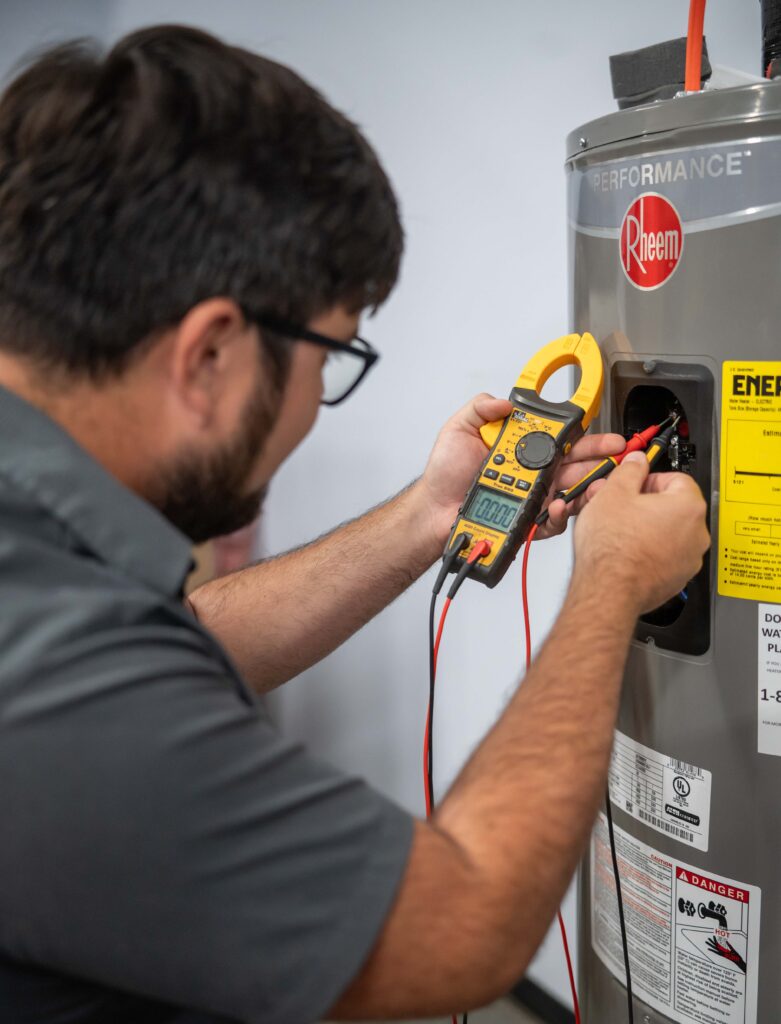
- Electrical Issues: For electric tanks, this usually means a tripped circuit breaker, a fried thermostat, or a burned out heating element.
- Gas Issues: For gas water heaters, the pilot light may have blown out, the thermocouple could be failing to detect the flame, or the main gas control valve has died.
- Venting Issues: Modern high efficiency and gas water heaters have advanced safety sensors. If your exhaust vent or intake pipe becomes blocked, the system will trigger a safety shutoff to prevent deadly carbon monoxide from backing up into your home.
3. Slow Recovery and Lukewarm Water
The Symptoms: You have some hot water, but you run out halfway through your shower, or it takes hours for the tank to heat back up after running the dishwasher.
The Problem: In an electric heater, this is the classic sign of a damaged heating element meaning only part of your tank is actually being heated. In gas heaters, this is often caused by a massive layer of mineral scale and sediment sitting at the bottom of the tank. The sediment acts as a thick insulator, blocking the heat of the gas burner from effectively reaching the water above it.
4. Rusty or Discolored Water
The Symptoms: When you turn on the hot water, it comes out looking brown, yellow, or red, and may have a metallic smell. (If the cold water is clear but the hot water is dirty, the issue is isolated to your water heater).
The Problem: Traditional tank water heaters have an internal component called an anode rod. This “sacrificial” rod is designed to attract corrosive elements in the water and rust away so your steel tank doesn’t have to. Once that rod is completely eaten away, usually after 3 to 5 years, the water will begin violently attacking the inside of the tank. Discolored water means your tank is actively rusting from the inside out.
5. Rumbling, Popping, and Banging Noises
The Symptoms: Your water heater sounds like a percolating coffee pot, crackles, or makes loud banging noises when it kicks on.
The Problem: These noises are the sound of boiling water. Over time, hard water minerals settle at the bottom of the tank and harden into a rock like layer of scale. Water gets trapped underneath this crust, right next to the burner. When the heater turns on, that trapped water rapidly boils and bursts through the sediment layer, creating loud popping sounds. This severely damages the tank and destroys energy efficiency.
Trust the Local Water Heater Experts
Diagnosing and repairing water heaters involves working with high voltage electricity, combustible gas, and extreme water pressure. It is not a DIY project.
At NCWaterHeaters.com and NCPlumbingServices.com, we are your local water heater experts. We hold specialized certifications with all of the major water heater manufacturers you will see in our market area. We don’t just swap tanks; our technicians go through rigorous, routine education and manufacturer training programs to stay on the cutting edge of industry standards.
Whether you need a complex warranty repair, a simple part replacement, or a complete upgrade to a high efficiency tankless system, we have the training and authority to get it done right the first time.
Don’t ignore the warning signs. If your water heater is struggling, contact us today for an expert evaluation!