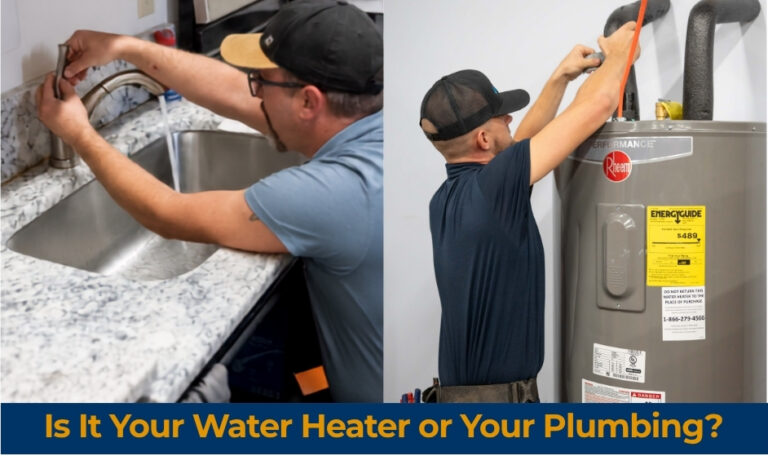
Is It Your Water Heater or Your Plumbing? How to Read the Warning Signs
We rely on our water heaters every single day for cooking, cleaning, and comfortable showers.

If your home in the Triangle, NC was built between 1978 and 1995, it may have polybutylene (PB) pipes—an outdated material known for its high risk of failure. Many homes still rely on PB or aging copper pipes, but we can replace them with durable, modern options. With updated plumbing that meets current standards, you can enjoy peace of mind knowing your home is protected from unexpected leaks and costly water damage.
If your water looks rusty, your water pressure feels like a slow drip, or you’ve had repeated leaks, it might be time for repiping. Our team can check it out and recommend the best fix—no stress, no guessing.
Repiping means replacing old, worn-out pipes with brand-new ones. It’s a big job, but we handle it smoothly—from assessment to final testing—so you get reliable water flow and fewer leaks.
We comply with the latest installation standards and use copper for your water supply lines and either PVC (polyvinyl chloride) or PEX (cross-linked polyethylene) for drain, waste, or vent systems.
Both copper and PVC/PEX pipes will last an average of 50-70 years.


We rely on our water heaters every single day for cooking, cleaning, and comfortable showers.
Upgrading to a tankless or high-efficiency water heater is one of the best investments you