



Your water heater is one of the hardest-working appliances in your home, providing hot water day in and day out. But because it holds dozens of gallons of water and is under constant pressure, a tank failure can quickly turn from a minor inconvenience into a major household disaster.
At NCWaterHeaters.com, we have seen firsthand the devastation a ruptured water heater can cause. That is why we highly recommend protecting your home with a Flood Stop system.
Here is everything you need to know about what this lifesaver does, how it works, and why it is a must-have for homeowners in the Triangle.
What is a Flood Stop System and How Does it Work?
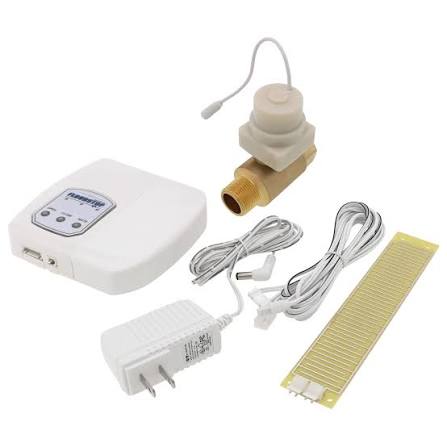
A Flood Stop system is an automatic, point-of-use leak detection and water shut-off device designed specifically for appliances like water heaters. Its purpose is simple: to stop a leak before it can cause massive flooding.
How it works:
-
The Sensor: A highly sensitive moisture pad is placed at the base of your water heater, typically inside the metal or plastic drain pan.
- The Valve: A motorized ball valve is installed directly onto the cold water supply line that feeds the water heater.
-
The Shut-Off: The moment the sensor detects even a small amount of pooling water, it sends a signal to the control unit. In a matter of seconds, the motorized valve automatically closes, completely shutting off the water supply to the tank.
-
The Alarm: Simultaneously, the control panel sounds an audible alarm to alert you that a leak has occurred.
Because the system operates on an AC power adapter with a battery backup, it will continue to protect your home even if the power goes out.
The Danger of Interior and Attic Water Heaters
While we recommend Flood Stop systems for all water heaters, they are an absolute necessity if your water heater is located in an interior space of the home, especially the attic.
When a water heater is located in a garage or unfinished basement, a leak is certainly a mess, but the damage is usually contained to concrete floors. However, when a water heater in an attic fails, gravity goes to work. A standard tank holds 40 to 50 gallons of water. If the tank bursts and there is no automatic shut-off, the continuous cold water supply will keep feeding the broken tank, sending hundreds of gallons of water downward.
The problems caused by an attic water heater leak are severe:
- Ceiling and Drywall Collapse: Water quickly saturates attic insulation and drywall, eventually causing the ceiling to cave into the living spaces below.
- Ruined Flooring and Furniture: Water cascading from the ceiling will warp hardwood floors, ruin carpets, and destroy electronics and furniture.
- Mold and Mildew: Any moisture trapped behind walls or under floorboards can quickly lead to dangerous mold growth, requiring professional remediation.
- Structural Damage: Prolonged water exposure can rot the wooden framing of your home.
Cheaper Than an Insurance Claim
Many homeowners assume their insurance will cover the damage if a water heater fails. While this is often true, a Flood Stop system is significantly less expensive than filing a homeowner’s insurance claim.
Consider the math: An average insurance deductible is $1,000 or more. On top of paying the deductible out of pocket, filing a major water damage claim will almost certainly result in a sharp increase in your monthly insurance premiums for years to come. That doesn’t even factor in the massive headache of having contractors tearing up your home, the potential loss of irreplaceable personal items, or the possibility of having to live in a hotel while your home is restored.
Investing in a Flood Stop system costs a mere fraction of a deductible and provides complete peace of mind.
Can It Be Added to My Current Water Heater?
Absolutely. You do not need to wait until you are replacing your water heater to get protected. A Flood Stop system can be retrofitted and added to most existing tanked water heaters. The installation is straightforward for a professional and does not require replacing your current tank.
Trust the Local Experts
Don’t wait for a disaster to strike before taking action. The team at NCWaterHeaters.com are your local experts in water heater safety, repairs, and installations. We proudly serve homeowners across the greater Triangle area, including Fuquay-Varina, Raleigh, Cary, Apex, and surrounding North Carolina communities.
If you have a water heater in an attic, closet, or finished living space, let us help you protect your home. Contact us today to schedule your Flood Stop system installation and gain the peace of mind you deserve!