




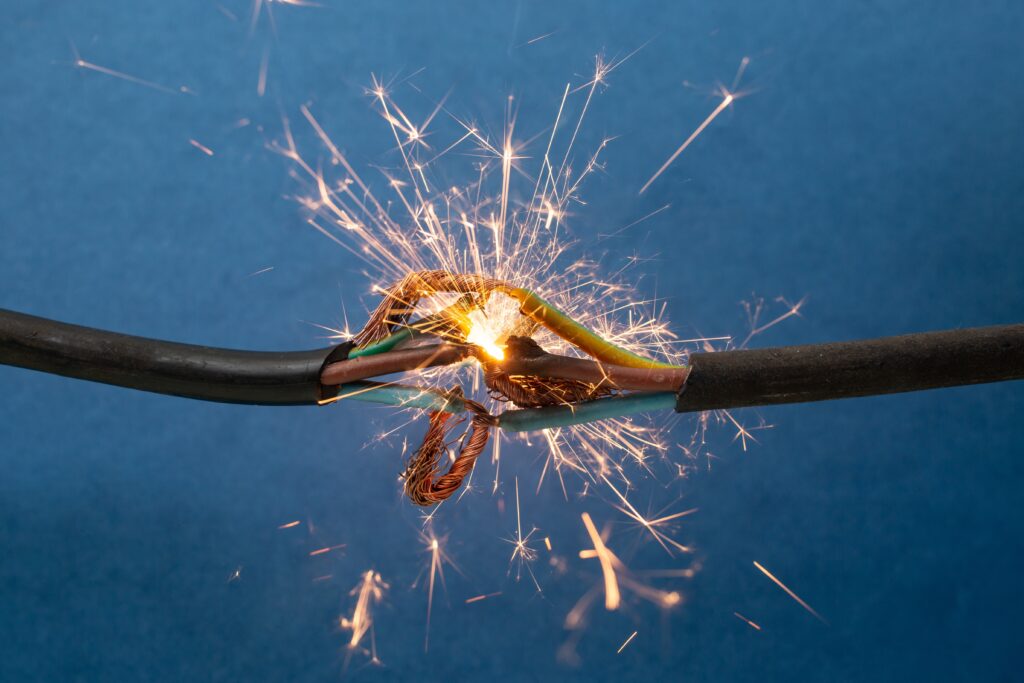
Frequent Circuit Breaker Tripping or Blown Fuses
- What It Means: Circuit breakers trip to prevent electrical safety hazards. Standard breakers will trip when too much power is being drawn as well as in the case of a short circuit. Specialty breakers like arc fault or ground fault breakers are made to detect these issues as well as other potential safety issues. Ground fault (GFCI) breakers are required in areas prone to water or moisture (kitchen, bathroom, exterior, garage etc) and these will trip when this moisture or water come in contact with live parts to prevent electric shock. Arc fault (AFCI) breakers, also known as fire guard breakers, will detect any high resistance on a circuit caused by damaged, pinched or pierced wiring, loose connections at plugs and switches and even bad appliance cords. All of these could eventually cause heat to build up and lead to property damage.
- What To Do:
- Standard breakers: Unplug devices and turn off switches on that circuit to rule out an overload or faulty fixture. If it continues to trip without heavy loads attached or lights switched on, have an electrician inspect the panel and circuit wiring.
- GFCI breakers: Follow above steps if these don’t help then there could still be water present on the circuit (exterior outlets) so once things dry out then the breaker should reset, this should still be checked by an electrician to ensure the problem doesn’t continue or get worse.
- AFCI breakers: Certain motor loads can cause these to trip so attempt the same steps as the standard breaker first. Some AFCI breakers (and GFCI breakers) will have diagnostic lights on them that will flash a code, try to remember this code. AFCI breakers are advanced and will detect the slightest issue so diagnostics are typically more difficult than standard or GFCI breakers.
Flickering, Dimming, or Buzzing Lights
- What It Means: Lights that flicker when large appliances (like an air conditioner, refrigerator, or microwave) kick on usually indicate that the appliance needs a dedicated circuit or that the main panel is struggling to supply enough voltage or this could be a sign of a loose connection in the circuit or the main panel. Buzzing can point to loose wiring or a faulty switch/fixture. With LED lights becoming more popular it is common that these will flicker when installed with a dimmer. It is important to make sure that the bulbs or light fixtures are dimmable and also that the dimmer installed is rated for LED lights.
- What To Do: Check if the issue is isolated to a single bulb or room. If it is isolated to one light in a room then check to see if the bulbs or fixtures are LED and dimmable if they are LED. If flickering continues or affects the entire house, contact your utility provider or a licensed electrician immediately to check for loose main connections.
Warm, Discolored, or Charred Outlets and Switches
- What It Means: Outlets should never feel warm to the touch or show signs of black or brown discoloration. Heat or discoloration indicates arcing (electrical current jumping between loose connections) which generates extreme heat and is a primary cause of house fires. If a switch needs to be fiddle with to work properly then it has a loose connection. Many homes are wired using back stabbed connections and this type of connection will eventually break down and cause these issues.
- What To Do: Stop using the outlet or switch immediately. Turn off power to that circuit at the main breaker box and call an electrician right away.
Burning Smells or Burning Plastic Odors
- What It Means: A persistent smell of burning plastic or vinyl near outlets, switches, or appliances means wire insulation or the device is melting due to overheating or arcing.
- What To Do: Treat this as an emergency. Shut off the main power supply to the home immediately and contact emergency electrical services or the fire department if smoke is present.
Burning, Sparks, or Shocking Sensation
- What It Means: Seeing sparks when plugging something in or turning a switch on or feeling a minor shock or tingling when touching an appliance or switch indicates poor grounding or an electrical short inside the system or device.
- What To Do: Unplug the device (if safe to do so) and do not use the outlet until it has been inspected and properly grounded.
Outlets that Buzz, Hum, or Crackle
- What It Means: Healthy electrical systems operate silently. Audible buzzing or popping noises coming from outlets, switches, or breaker panels indicate loose wiring or failing internal contacts.
- What To Do: Turn off the circuit breaker for that area and have a professional inspect and replace the outlet or switch.
Outlets and Switches That Are Loose or Wobbly
- What It Means: Loose outlets allow plugs to move around, which loosens the wire terminations over time. This creates loose electrical connections, leading to arcing and potential fires.
- What To Do: Turn off the breaker, open the faceplate, and tighten or replace the outlet housing. Sometimes this can mean that the box in the wall is damaged and needs to be replaced.
Quick Prevention & Safety Guidelines
- Never Overload Outlets: Avoid plugging high-draw appliances (space heaters, microwaves, hair dryers) into extension cords, power strips or standard circuits.
- Upgrade Outlets in Moisture Areas: Ensure all outlets near water sources (kitchens, bathrooms, outdoors, basements) are equipped with GFCI (Ground Fault Circuit Interrupter) protection. Exterior outlets also need to be weather resistant and be installed with in use bubble covers to protect against rain even when in use.
- Schedule an Inspection: If your home is more than 25–30 years old and hasn’t had its electrical system upgraded, have a licensed electrician evaluate the wiring and electrical panel to ensure it meets modern safety codes. Call us today and one of our skilled, professional and licensed electricians will come assess your home’s electrical system and leave some recommendations to make your home safer for you and your family.