




Tankless water heaters are sophisticated systems that, if installed properly and maintained correctly, can offer a long term hot water solution with the advantage of endless hot water and high efficiency. For homeowners making the switch from a traditional tanked water heater to a gas fired tankless system, an often sizeable investment will be required. Installing a tankless is more involved than just merely plugging it into the existing gas and venting from the old tanked water heater.
In most cases, there will be moderate modifications required to accommodate the fuel, venting, and electrical needs for a tankless water heater. Not only are there strict codes involved, but the manufacturers of tankless water heaters have very specific requirements on how the system is installed to assure safety and for a proper working system. At the end of the day, converting to a tankless will cost significantly more than a standard tanked water heater replacement. In this article, we will discuss the modifications needed to install the tankless water heater, the importance of hiring a professional, and why cutting corners will always cost you more in the long run.
The Total Cost to Convert
When upgrading to a tankless system, the initial investment will be noticeably higher than a simple swap of a traditional tank. Because this conversion requires extensive modifications to your home, the total cost encompasses much more than just the unit itself. You must account for upgrading the gas piping to handle the massive fuel demand, installing specialized exhaust venting, running a dedicated 120 volt electrical circuit, and obtaining the mandatory municipal permits and inspections. While a standard replacement of an existing tanked water heater is relatively straightforward and much lower in price, adapting a home for a tankless system is a major plumbing and electrical overhaul. In many cases, these required infrastructure changes make the upfront cost of a tankless conversion substantial when compared to simply installing another standard tank.
The Incredible Benefits of a Tankless System
Despite the higher initial installation cost, a tankless water heater offers incredible advantages that make the investment worthwhile. The most immediate benefit is the luxury of endless hot water, meaning your family can run multiple showers and appliances simultaneously without ever running out. Furthermore, these units offer impressive space savings since their compact design mounts neatly on a wall, freeing up valuable square footage in your garage or utility room. Tankless systems are also highly fuel efficient because they only consume energy when you actively demand hot water, rather than burning fuel to keep a large reserve heated all day long. This exceptional efficiency, paired with their advanced engineering, means that with proper maintenance, a tankless water heater offers far greater system longevity than a traditional tank.
Tanked vs. Tankless: Understanding the Core Differences
To understand why a tankless conversion is such a significant upgrade, you have to look at how different these two systems truly are. A traditional tank water heater is a relatively simple device. A tankless unit, however, is a highly engineered, computerized machine. Swapping one for the other requires overhauling three major infrastructure components in your home:
1. Significant Fuel Demands
A standard 50 gallon gas water heater typically draws around 40,000 BTUs of gas to slowly heat a reserve of water. A tankless water heater rapidly heats water instantly on demand, which requires a massive amount of energy, often up to 199,000 BTUs. Because of this, the existing gas lines serving your old tank are almost always undersized for a tankless unit. Upgrading the gas piping is critical to ensure the system gets the volume of fuel it needs to operate without starving.
2. Specialized Venting
Traditional tank heaters use mostly metal venting, where hot exhaust gases naturally rise through a metal flue out the roof. Tankless water heaters are so efficient that they extract most of the heat during combustion, leaving the exhaust gases much cooler. Because these gases will not rise naturally, tankless units require forced mechanical venting, typically using specific PVC or stainless steel piping, to push the exhaust out safely. You cannot simply reuse the old metal venting and a new venting system will be installed.
3. Electrical Power Needs
Standard gas tank heaters rely on a pilot light and generate their own tiny electrical current via a thermopile, meaning they do not plug into the wall. Because a tankless system is driven by internal computers, sensors, and exhaust fans, it requires a 120 volt GFCI electrical circuit.
The Danger of the Cheap Bid
Because tankless systems are highly advanced machines, they require incredibly precise installation. Not following local building codes and strict manufacturer requirements almost always leads to premature failures, voided warranties, and expensive repairs.
In fact, the vast majority of the service calls we receive for tankless water heater issues are directly related to two things: an improper installation and a lack of routine maintenance, like annual system flushing.
We frequently get called out to homes where the tankless system was installed by someone who promised to do it cheaper. To hit that low price point, these installers skip crucial steps, reuse old materials, and ignore safety codes. Furthermore, they rarely pull the required permits. A tankless water heater conversion legally requires a permit and a municipal or county inspection. If a contractor tells you otherwise, they are cutting corners at your expense.
Ultimately, it is almost always more expensive to diagnose, repair, and rework an improperly installed system than it would have been to just hire a qualified professional to do it right the first time.
Real World Case Study: When Cheap Gets Expensive
Below is an example from a recent service call where a homeowner hired a contractor based purely on the lowest estimate. The system was failing entirely.
Project Notes and Findings:
- No Permit or Inspection: The original tankless water heater conversion was not permitted or inspected. The contractor gave the owner a cheaper estimate than their competitors by skipping these legal requirements.
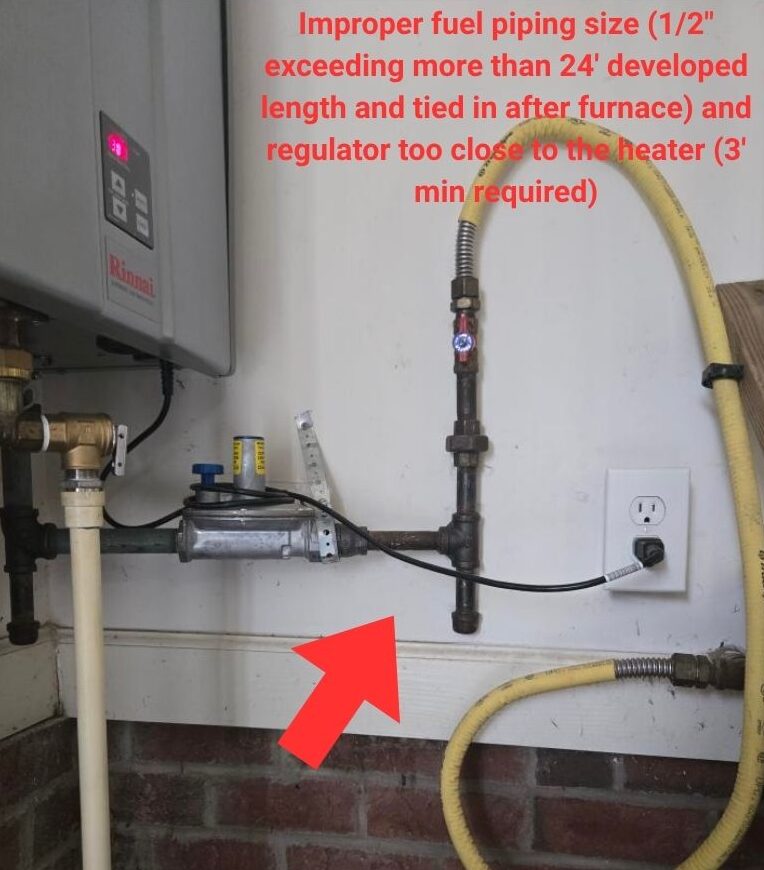
- Improper Gas Regulator Setup: A gas regulator rated strictly for exterior use was installed indoors, and it was placed far too close to the water heater. Manufacturers require a minimum 3 foot length of fuel piping between the regulator and the water heater.
- Undersized Fuel Piping: The fuel piping was severely undersized for the system, leading to fuel starvation and an eventual gas control valve failure. Most manufacturers require a 3/4 inch gas line if the developed length of the fuel piping exceeds 24 feet.
- Incorrect Gas Line Branching: The gas piping serving the tankless was tied in after several other branches on the fuel system. Because of its massive BTU draw, the tankless should typically be the first branch of the gas system before it splits off to other appliances.
- Dangerous Venting: The contractor stuffed the exhaust vent for the new tankless inside the old vent cap that served the original water heater. This caused issues with the proper flow of exhaust gases and created a safety hazard.
- Electrical Code Violations: The electrical outlet was not labeled at the panel box, did not have a GFCI notification on the outlet cover, and was tied into an existing garage circuit. For optimal safety and performance, a tankless unit should be on its own dedicated circuit, with a labeled breaker in the panel box, and an individual GFCI outlet serving only the heater.
The Result: The corrections and repairs needed to bring this tankless system up to code and meet the manufacturer requirements ended up costing the homeowner several thousand dollars. In the end, the owner spent significantly more fixing the botched job than they would have spent to install the system correctly from the start.
Trust the Tankless Experts
Your home plumbing, gas, and electrical systems are no place for guesswork. If you are investing in a tankless water heater, you need a team that understands the engineering behind it.
At NCWaterHeaters.com, we are tankless water heater experts. We are fully certified through all of the major tankless manufacturer”s training courses for installations, routine maintenance, and warranty repairs. We never cut corners, we pull all required permits, and we ensure your system is installed to deliver years of safe, reliable, and endless hot water.