




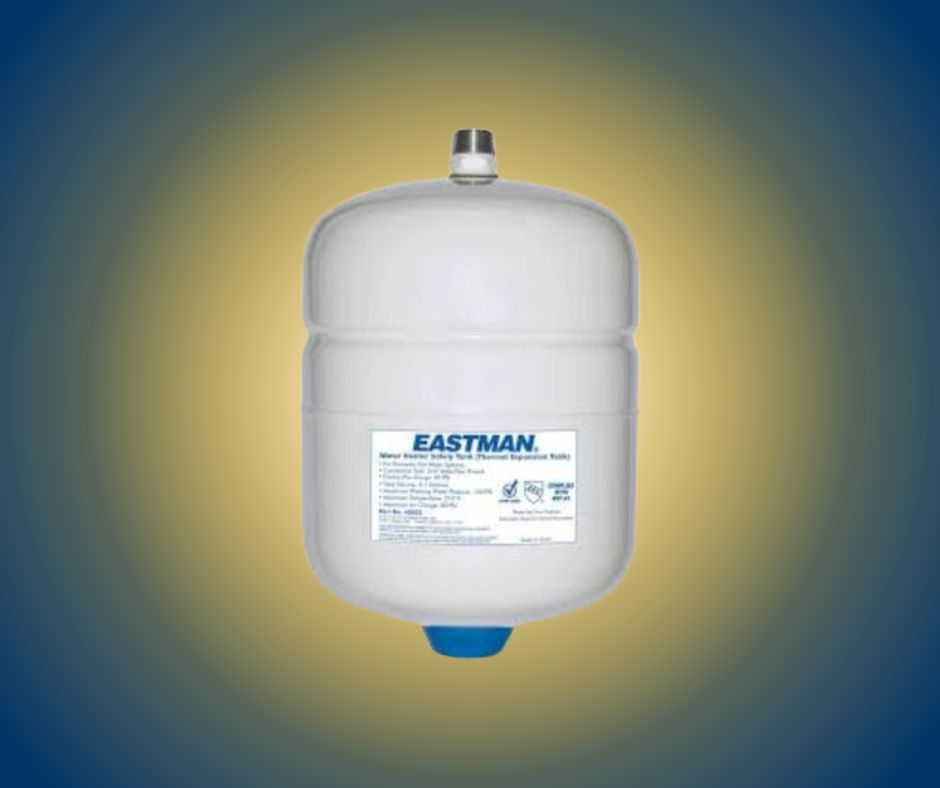
If you have looked at your water heater recently, you may have noticed a small, extra tank sitting on top of or suspended beside it that looks a bit like a small propane tank or basketball. That is a thermal expansion tank, and while it might look like a minor accessory, it plays a massive role in protecting your entire home’s plumbing system from catastrophic damage.
At NCWaterHeaters.com, we frequently get asked by homeowners in the Triangle what this tank actually does, whether it is really necessary, and if it is just another rule invented by local building inspectors.
Here is everything you need to know about how thermal expansion works, why expansion tanks are required for your warranties, and how to tell if your home needs one.
What Is Thermal Expansion and How Does It Work?
To understand why you need an expansion tank, you first have to understand basic physics: water expands when it gets hot.
When your water heater turns on to heat up 40, 50, or 80 gallons of cold water, that water expands in volume by roughly 2% to 3%. In a standard 50-gallon tank, that creates an extra 1 to 1.5 gallons of physical water volume.
- In an “Open” System: Decades ago, expanded water simply pushed backward out of your home and flowed back into the main city supply line. Pressure never built up inside the house.
- In a “Closed” System: Today, municipal water systems install check valves, backflow preventers, and pressure-reducing valves (PRVs) at your water meter. These create a “one-way street” into your home. Once water enters your plumbing, it cannot go backward.
Because water cannot be compressed, that expanding hot water has nowhere to go. It builds up extreme pressure spikes inside your pipes, reaching upwards of 120 PSI or higher every time the water heater cycles on!.
How the Expansion Tank Saves Your Plumbing
A thermal expansion tank acts as a pressure shock absorber. Inside the steel casing is a heavy-duty butyl rubber bladder or diaphragm that divides the tank into two sealed halves:
- Top Half: Filled with pressurized air (pre-set to match your house’s incoming water pressure).
- Bottom Half: Connected directly to your cold water supply line.
When your water heater warms up and water expands, the expanding water pushes into the bottom chamber of the expansion tank, compressing the rubber diaphragm against the cushion of air above it. Instead of pressure spiking in your pipes, the extra water simply cushions into the tank. Once a hot water faucet is opened, that compressed air pushes the water right back out into the lines.
Mandatory for Manufacturer Warranties
It isn’t just local building codes that require expansion tanks, manufacturers require them too.
Subjecting your plumbing system to daily pressure spikes causes severe thermal stress. Over time, high pressure will:
- Crack internal glass linings in water heater tanks, causing premature tank rupture.
- Destroy sensitive rubber seals, solenoid valves, and gaskets in washing machines and dishwashers.
- Cause toilet fill valves to weep and shower cartridges to leak.
- Accelerate pipe fatigue, causing pinhole leaks in copper and premature failure in PEX fittings.
Because of this damage, major manufacturers—including A.O. Smith, Rheem, Bradford White, as well as major faucet and fixture makers—explicitly state that their warranties are voided if the equipment is installed on a closed system without a functional thermal expansion tank.
Do YOU Need an Expansion Tank? (The Simple Rule of Thumb)
The quick and easy way to know if your home requires a thermal expansion tank comes down to one simple question:
Do you have a water meter in your yard and receive a municipal water bill every month?
If the answer is YES, you are almost certainly on a closed municipal system, and a thermal expansion tank is mandatory by code and manufacturer standards.
Where Are Expansion Tanks NOT Required?
Homes on private well water systems generally do not require a dedicated thermal expansion tank. Private wells already utilize a large well pressure tank equipped with a bladder that naturally absorbs thermal expansion throughout the entire house.
The NCWaterHeaters.com Difference
At NCWaterHeaters.com, we don’t cut corners on your safety or your home’s protection. Every single estimate we provide for a water heater replacement includes a brand-new, properly sized, and pre-charged expansion tank wherever it is required by code. We ensure the tank is properly supported, insulated, and installed over the drip pan so your home stays 100% safe, code-compliant, and fully covered under warranty.
We proudly serve homeowners across the entire Triangle area, including Fuquay-Varina, Raleigh, Cary, Apex, Holly Springs, Clayton, and surrounding communities.
Want More Expert Home Tips?
Don’t forget to bookmark our NCWaterHeaters.com Blog! Check back regularly for expert guides, maintenance tips, and deep dives into water heaters, residential plumbing, electrical updates, and home remodeling.
Ready to upgrade your water heater or protect your home with a new expansion tank? Contact NCWaterHeaters.com today!