



We all love good water pressure in the shower, but there is such a thing as “too much of a good thing.” When water pressure is too high, it stops being a luxury and starts being a destructive force that silently attacks your home’s plumbing infrastructure.
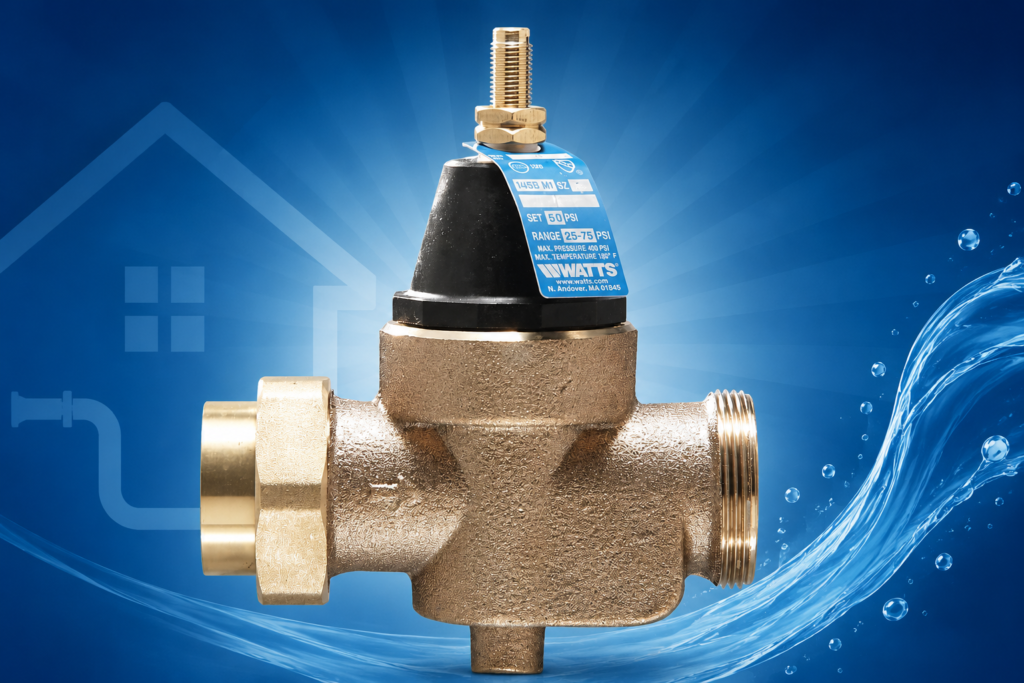
The first line of defense against this invisible threat is a small, bell shaped device called a Pressure Reducing Valve (PRV).
At NCWaterHeaters.com LLC and NCPlumbingServices.com, we inspect thousands of homes in the Triangle area. One of the most common issues we find is a failed or missing PRV. Here is why this device is critical for your home’s safety and compliance.
What is a PRV?
Think of a Pressure Reducing Valve as a “surge protector” for your plumbing. Municipal water suppliers often pump water at very high pressures (sometimes over 100 PSI) to ensure it reaches fire hydrants and tall buildings.
However, your residential pipes and fixtures are only designed to have a working pressure between 50 and 70 PSI. The PRV sits on your main water line where it enters your house. It automatically throttles down that high city pressure to a safe, manageable level before it flows into your home.
The Consequences of High Water Pressure
Without a working PRV, high velocity water hammers against your pipes, fittings, and valves every time you turn a faucet on or off. Over time, this leads to:
- Burst Pipes: The constant stress can blow apart pipe joints, leading to catastrophic flooding.
- Appliance Failure: High pressure blows out the seals in washing machines, dishwashers, and icemakers.
- Dripping Faucets & Toilets: If your toilet “runs” constantly or faucets drip despite new washers, high pressure is often forcing water past the seals.
- Water Heater Damage: This is a major risk. High pressure causes thermal expansion issues, causing your water heater’s safety relief valve (T&P valve) to leak or “pop,” and can even crack the tank liner.
NC Code & The Warranty Trap
Because high water pressure is a known safety hazard, North Carolina Plumbing Code typically mandates that homes connected to municipal water systems must have an installed and accessible Pressure Reducing Valve.
But it’s not just about government code, it’s about your wallet. Here is the harsh reality: Most manufacturers of water heaters (like Bradford White, Rheem, AO Smith) and high end plumbing fixtures explicitly state in their manuals that their warranty is void if the unit is installed in a system with excessive pressure (usually defined as above 80 PSI) without a working PRV.
If your water heater tank bursts after only three years because of high pressure, and you don’t have a PRV, the manufacturer can legally deny your warranty claim.
The Exception: Private Wells
If you live in a rural area on a private well, you generally do not need a PRV. Why? Because your pressure is controlled by the pressure switch on your well tank. Since your well pump doesn’t generate the massive pressures that city mains do, a reduction valve isn’t necessary.
Is Your Home Protected?
NCWaterHeaters.com LLC and NCPlumbingServices.com are your local plumbing experts. We don’t just swap parts; we ensure your home is code compliant and your appliances are protected. Our licensed plumbers can test your home’s water pressure, inspect your existing PRV for proper operation, identify hidden pressure-related issues, and recommend the right repair or replacement to keep your plumbing system operating safely and efficiently for years to come. A simple inspection today can help you avoid expensive emergency repairs, water damage, premature appliance failure, and unnecessary utility costs in the future.
Protect your investment today. Call us for a pressure check and system evaluation.
📞 Call Now: 919-868-3585 💻 Visit: NCWaterHeaters.com | NCPlumbingServices.com