



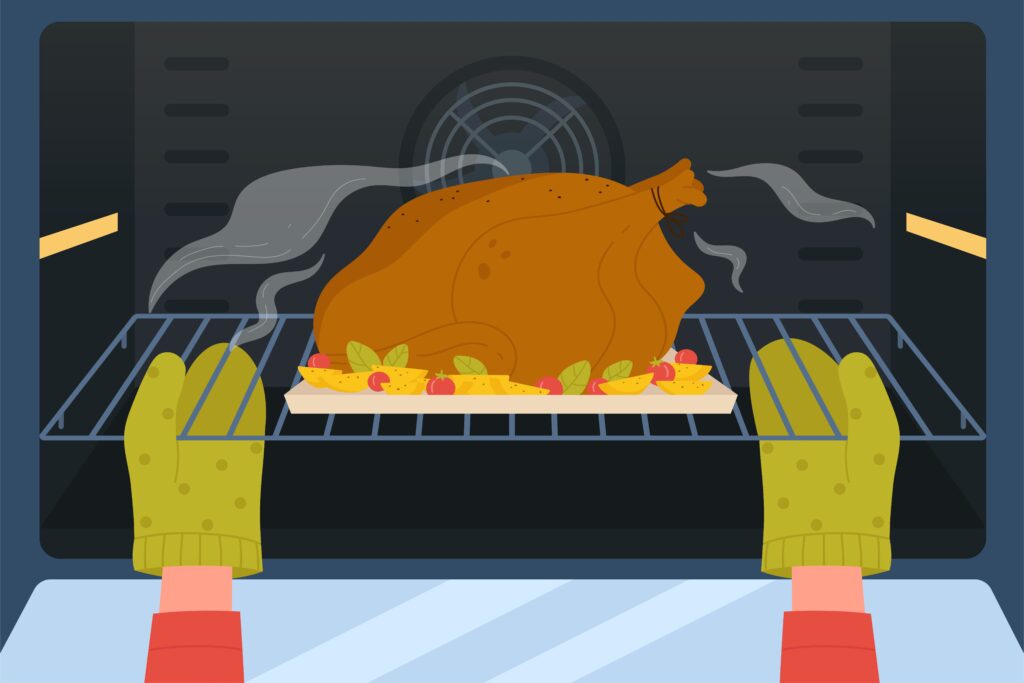
Thanksgiving is the biggest cooking holiday of the year and also is the day when most cooking fires occur. When you bring out all of the extra roasters, slow cookers, and microwaves—or spill their prep work into the garage—the risk of electrical overloads, carbon monoxide poisoning, and grease fires climbs sharply. A few smart adjustments to how you power your appliances and stage your overflow cooking areas will keep your celebration safe.
Give High Power Appliances Their Own Circuits
Depending on the age of your home your standard kitchen outlets are connected to 15- or 20-amp circuits. Modern countertop appliances draw heavy power, and plugging two into the same circuit will trip a breaker or worse, overheat hidden wiring.
- Dedicated Microwave Circuits: A standard microwave pulls 1,000 to 1,500 watts on its own so these should always be kept on a dedicated 20A circuit, and never share that outlet with another heat-producing appliance.
- Spread Out Your Heating Appliances: Electric roasters, air fryers, toaster ovens, and coffee makers each draw 1,200 to 1,800 watts. Spread them across different rooms rather than clustering them on a single kitchen counter. Many homes are wired with additional 20A circuits in dining rooms and this is due to people using these outlets for cooking/ heating appliances.
- Ditch the Power Strips: Power strips are not rated for heavy power draw like you get with cooking or heating appliances (space heaters included). Due to the small wiring inside of power strips you should never plug heat-producing appliances into standard power strips or lightweight extension cords because they can melt or catch fire. Plug appliances directly into wall outlets whenever possible.
- Secondary Cooking Area in Garage: Setting up a secondary “cooking stage” in the garage is a popular way to free up oven space, especially for electric roasters, warming trays, or buffet tables. However, garages could present unique hazards . Depending how and when the home was wired the garage outlets will be either 15 or 20A circuits and are required to be Ground Fault Circuit Interrupter (GFCI) protected to prevent shock hazard so be sure to use a properly protected outlet for any of the appliances. If you must use an extension cord for an electric roaster or slow cooker, use a heavy-duty, 12-gauge outdoor-rated cord and keep it short.
General Kitchen Fire Prevention
Beyond electrical setups and overflow spaces, basic kitchen habits remain your best defense on a busy holiday.
- Stay in the Kitchen: Unattended cooking is the leading cause of kitchen fires. If you are frying, boiling, or broiling, stay by the stove. If you leave the kitchen, turn off the burner.
- Watch Your Sleeves and Towels: Keep dish towels, oven mitts, wooden spoons, and food packaging well away from stovetop burners. Roll up loose sleeves before reaching over hot pans.
- Keep a Lid Nearby: If a pan catches fire, never throw water on it, water causes burning grease to splatter and spread instantly. Instead, slide a metal lid or baking sheet over the pan to smother the flames, turn off the heat, and leave it covered until completely cool.
- Establish a “Kid-Free Zone”: Keep children and pets at least 3 feet away from the stove, hot oven doors, and areas where hot liquids or heavy roasting pans are being carried.
Summary:
Holidays are a great time to spend with family and friends so let’s make sure we are keeping our loved ones safe by following the above safety tips. If you host a large gathering and know you typically set up a secondary cooking area in the garage, dining room, hallway etc, give us a call today and our licensed electrical team can come out and assess your home to see if and how new circuits and outlets could be added to those areas.