



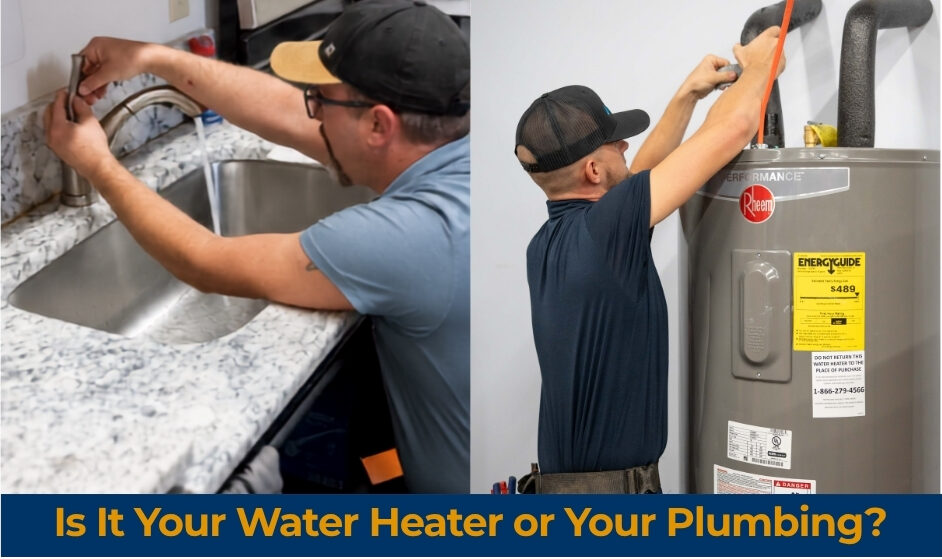
We rely on our water heaters every single day for cooking, cleaning, and comfortable showers. Because these units work silently in the background, it is easy to forget about them until the water suddenly runs cold.
When plumbing issues arise, homeowners often immediately blame the water heater. However, symptoms like low water pressure, discolored water, or strange smells can actually originate from your home’s broader plumbing system or the municipal water supply.
Here are the top signs your water heater needs professional maintenance, along with a simple guide on how to tell whether the problem is coming from your tank or your pipes.
5 Signs Your Water Heater Needs Maintenance
If you notice any of the following symptoms, it is time to schedule a tune-up for your water heater:
- Rumbling, Popping, or Banging Noises: If your water heater sounds like a percolating coffee pot or is making loud popping noises, you have a sediment problem. Minerals from hard water settle at the bottom of the tank and harden. The heat from the burner gets trapped under this mineral layer, causing the water to boil and pop. This drastically reduces efficiency and damages the tank.
- Running Out of Hot Water Quickly: If your showers are getting shorter or the water only gets lukewarm, one of your heating elements (in an electric tank) may have failed, or heavy sediment buildup is displacing the water volume in the tank.
- Rusty or Discolored Water: A traditional steel tank is protected from rust by an internal “sacrificial” anode rod. When that rod fully depletes, the tank itself begins to rust from the inside out, turning your hot water a brownish red color.
- A “Rotten Egg” Smell: If your hot water smells like sulfur, it is usually a chemical reaction between naturally occurring bacteria in the water and a decaying magnesium anode rod inside your water heater.
- Visible Leaks or Pooling Water: Any moisture around the base of the tank, the pressure relief valve, or the supply pipes is typically a related to a leaking tank. A leaking tank cannot be repaired and must be replaced before it causes catastrophic water damage.
The Diagnostic Test: Is it the Heater or the Plumbing?
How do you know if the issue is actually the water heater and not a bigger problem with your home’s water distribution system? Use these three simple isolation tests:
1. The Discolored Water Test
How to check: Turn on the cold water at your bathroom sink. Let it run for a minute. Is it clear? Now turn it off, and turn on only the hot water. Is it rusty or yellow?
The Verdict: If only the hot water is discolored, your water heater is rusting inside and needs immediate attention. If both the hot and cold water are discolored, the problem is likely your municipal water supply (e.g., a flushed fire hydrant nearby) or deteriorating galvanized steel pipes inside your home.
2. The Water Pressure Test
How to check: Test the water pressure at multiple faucets. Does the pressure drop only when you turn the handle to the hot side?
The Verdict: If the cold water pressure is strong but the hot water is weak, the restriction is at the water heater (often caused by severe scale buildup in the tank nipples or a clogged heat exchanger in a tankless unit). If both hot and cold water have poor pressure throughout the house, you likely have a failed Pressure Reducing Valve (PRV), a clogged whole home water filter, obstruction in the system, or an issue with the main water line from the street.
(Note: If the pressure issue is isolated to just one single sink or showerhead, you probably just have a clogged aerator or shower cartridge on that specific fixture.)
3. The Smell Test
How to check: Fill a glass with cold water, step away from the sink (to avoid smelling the drain), and smell it. Repeat the process with a glass of hot water.
The Verdict: If only the hot water smells like sulfur or rotten eggs, your water heater needs to be evaluated. If both the hot and cold water smell bad, you are likely dealing with high sulfur content in your well water or a municipal water treatment issue.
Don’t Wait for a Breakdown: Schedule Maintenance Today!
Routine maintenance is the key to preventing unexpected cold showers and expensive water damage. Having a professional flush your tank, inspect the heating elements, and check the safety valves once a year will add years to your water heater’s lifespan.
At NCWaterHeaters.com and NCPlumbingServices.com, our licensed technicians are experts at diagnosing whether your issue is a simple plumbing fix or a failing water heater. We provide comprehensive inspections and honest, needs-based recommendations.
We proudly serve the greater Triangle region, including Raleigh, Cary, Apex, Holly Springs, Fuquay-Varina, and surrounding communities in Wake, Johnston, and Harnett counties.
Stop guessing what is wrong with your plumbing. Contact us today to schedule your annual water heater maintenance or a free plumbing inspection!