



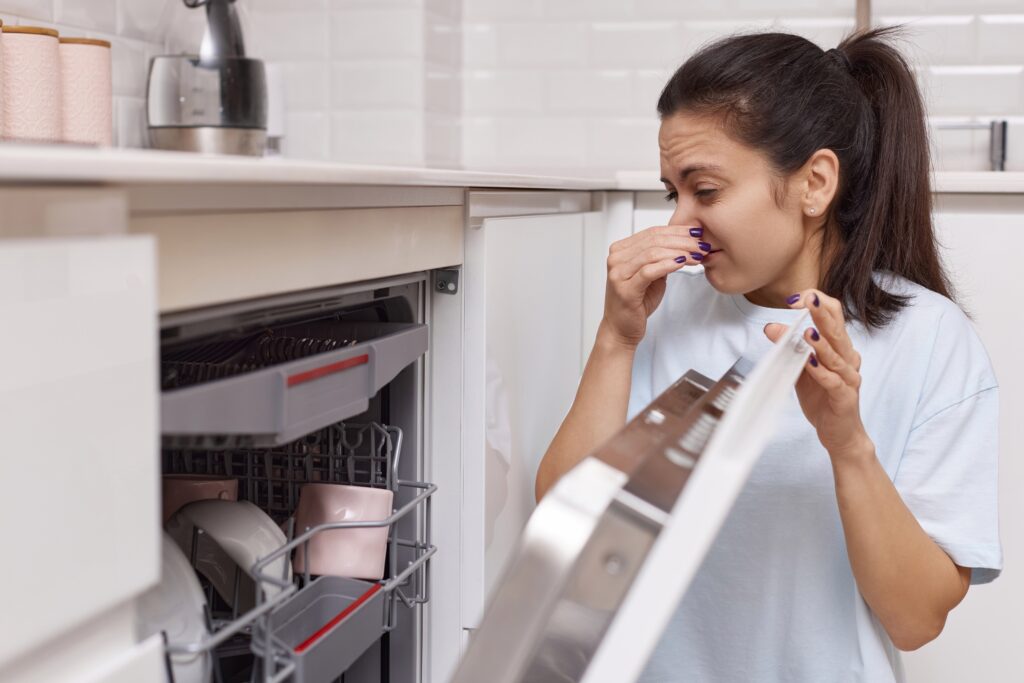
Few things are more off-putting than turning on your faucet for a glass of water or stepping into a warm shower, only to be hit with a foul odor. Whether it smells like rotten eggs, metal, chlorine, or earth, a strange scent coming from your water supply is a clear sign that something isn’t right.
While a bad odor doesn’t always mean your water is dangerous, it is definitely a nuisance that needs to be addressed. Here is a breakdown of the most common reasons your residential water might smell, and what you can do about it.
The Water Heater (The “Rotten Egg” Smell)
If you only notice a sulfur or “rotten egg” smell when you run the hot water, the culprit is almost certainly your water heater. This can be one of the most common reasons your home’s water has an odor.
The Anode Rod Reaction: Standard tank water heaters contain a sacrificial “anode rod” (usually made of magnesium or aluminum) designed to attract corrosive elements and protect the tank from rusting. However, if your water contains high levels of sulfates, sulfur-reducing bacteria in the tank can react with the magnesium anode rod, producing hydrogen sulfide gas. This gas is what causes that terrible rotten egg smell.
Aging Water Heaters: Older water heaters that haven’t been regularly flushed can accumulate a thick layer of sediment and bacteria at the bottom of the tank, contributing to musty or foul odors.
Well Water Woes
Homeowners on private wells are particularly susceptible to water quality issues and odors. This is because their water is not treated by a municipality.
Hydrogen Sulfide Gas: Just like in a water heater, sulfur bacteria can naturally occur in the groundwater feeding your well, producing a strong rotten egg smell in both hot and cold water.
Earthy or Musty Odors: This is often caused by decaying organic matter in the well system or surface water leaking into the well casing.
Chemical Smells: Agricultural runoff or industrial contaminants can sometimes seep into the groundwater, leading to unnatural chemical odors.
Piping and Municipal Water Lines
Sometimes, the issue originates before the water even reaches your fixtures.
Municipal Treatments: If your water smells like bleach or a swimming pool, it is likely due to the chlorine used by your local municipality to disinfect the water supply. While safe, it can be highly unpleasant.
City Line Issues: Occasionally, seasonal algae blooms in municipal reservoirs or stagnant water in city supply lines can cause an earthy or fishy smell.
Your Home’s Piping: If your house is older and has galvanized steel or iron pipes, they can degrade over time. This can leach trace minerals into the water, giving it a sharp, metallic smell or taste.
The “Fake Out”: Sink Drain Odors
Before you panic about your water quality, try this test:
Fill a glass with water, step away from the sink, and smell the glass. If the water smells fine, the odor is actually coming from your drain!
Bacteria and decomposing food debris can build up in the P-trap beneath your sink. This releases sewer gases upward when the faucet is turned on and displaces the air.
How We Can Help
Diagnosing a water odor requires expertise, as the solution varies wildly depending on the source. Replacing an anode rod with a powered titanium version might fix a hot water issue, while whole-home carbon filtration or well-shocking might be required for supply-line issues.
At NCWaterHeaters.com LLC and NCPlumbingServices.com, we are your local water quality experts. We have the diagnostic tools and the industry knowledge to track down the most common reasons your home’s water has an odor and provide a permanent, effective solution.
Our Service Areas:
We proudly provide expert plumbing and water quality solutions to homeowners across the region, including:
Raleigh
Durham
Chapel Hill
Apex
Cary
Fuquay-Varina
Angier
Clayton
Wake Forest
Morrisville
Don’t live with smelly water. Contact us today to schedule a water quality diagnostic. Get your home’s water back to being fresh, clean, and odor-free!