




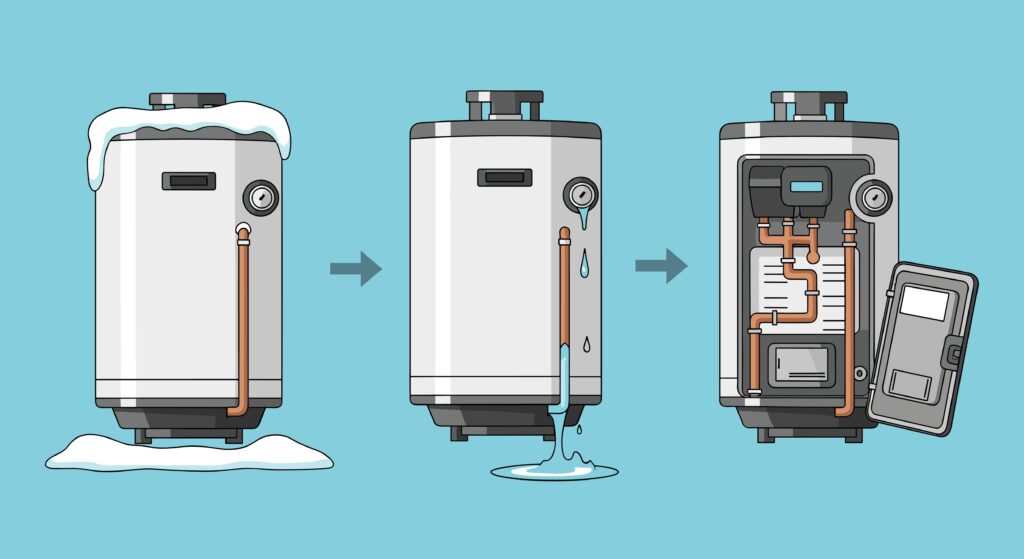
January is the month when water heaters work the hardest and fail the most.
Between colder incoming ground water, holiday stress, back to school mornings, and older units already near the end of their lifespan, it’s no surprise we get more calls this month than any other.
Here’s why your water heater might be struggling right now and how to fix it without wasting money or dealing with cold showers.
Cold Weather = Colder Incoming Water
When temperatures drop, the water entering your water heater is dramatically colder. This means:
- Your heater must work harder
- Recovery time increases
- Hot water “runs out” faster
- Older units struggle to keep up
Even a perfectly healthy heater can feel weaker in January.
Higher Hot Water Demand After the Holidays
January =
✔ kids back in school
✔ people returning to work
✔ more showers
✔ laundry loads increase
✔ more dishwashing
It all adds up.
Sediment Buildup Shows Itself in Winter
Sediment accumulates at the bottom of the tank year round. But in winter?
The heater must work harder through the sediment block. This causes:
- Popping or rumbling noises
- Slow heating
- Less available hot water
- Higher energy bills
If your heater sounds like it’s boiling rocks it may need flushing.
Older Units Fail More Often in January
The average water heater lasts:
- 8–12 years (tank)
- 15–20 years (tankless)
Cold weather pushes aging units past their limits. If your water heater is over 10 years old and showing symptoms, it’s time for a professional assessment.
January Is the #1 Month for Emergency Leaks
Cold snaps and fluctuating temperatures can cause:
- Expansion and contraction of metal
- T&P valve leaks
- Undetected cracks to worsen
- Rusted tanks to rupture
If you see a leak at your water heater, shut off water and call immediately.
What Homeowners Can Do Right Now
✔ Check the age of your water heater
If it’s 8+ years old, it may be near the end of its lifespan.
✔ Listen for rumbling or popping
This means sediment has built up and heating efficiency is dropping.
✔ Insulate exposed hot-water pipes
Warmer pipes = hotter water at the tap and reduced strain on the heater.
✔ Flush the heater (if it’s safe for your model)
Tankless and older tanks may require a pro. Tanked water heaters more than 10 years of age are not recommended for flushing.
✔ Reduce simultaneous hot water use
Stagger showers or run laundry later in the day.
✔ Schedule a January inspection
A 20 to 30 minute check can prevent major mid-winter failures.
Serving Homeowners Throughout the Triangle
We help homeowners in:
Holly Springs | Apex | Cary | Raleigh | Fuquay-Varina
With:
• Water heater repairs
• Replacement & installation
• Sediment flushing
• Leak repairs
• Tankless upgrades
• Troubleshooting
No pressure. No upselling. Just honest, reliable service, especially when January cold starts testing your water heater.