



Drain line replacement is one of the most important plumbing projects a homeowner may face. Whether it’s a failing sewer line, a collapsed drain pipe, or recurring blockages caused by aging materials, the process involves far more than simply digging and replacing a pipe. Understanding each step helps you know what to expect in terms of timeline, safety protocols, and cost.
Here’s a clear breakdown of what goes into a professional drain replacement in the Raleigh area and why the price can vary significantly from home to home.
1. Locating & Diagnosing the Problem
Before any work begins, a licensed plumber performs a full assessment, which may include:
- Camera inspection of the drain line
- Locating equipment to pinpoint pipe depth and areas of damage
- Evaluating pipe material (cast iron, PVC, Orangeburg, clay, etc.)
- Checking the slope of the line and surrounding soil conditions
A proper diagnosis prevents unnecessary excavation and ensures the repair is done correctly the first time.
2. Obtaining a Dig Ticket (811 Utility Locate)
Any time a drain line needs to be replaced or the ground must be opened, North Carolina law requires calling 811 for a utility locate commonly known as a dig ticket.
This step is essential for safety and code compliance.
What the dig ticket does:
- Alerts all utility providers (gas, electric, fiber, water, sewer)
- Ensures underground utilities are marked before excavation
- Prevents dangerous hits on live gas or electrical lines
- Protects the homeowner and contractor from liability
A dig ticket typically takes up to 5 business day for all utilities to respond and mark their lines. Work cannot legally begin until all marks are complete. Emergency dig tickets are available but do require a legitimate emergency to process.
3. Pulling Permits (When Required)
Most major drain replacements require a plumbing permit, especially when:
- A sewer line is being replaced
- Drain lines under or outside the home are being altered
- The connection to the municipal sewer is involved
The permit ensures the work will be inspected and meets North Carolina Plumbing Code for safety and functionality.
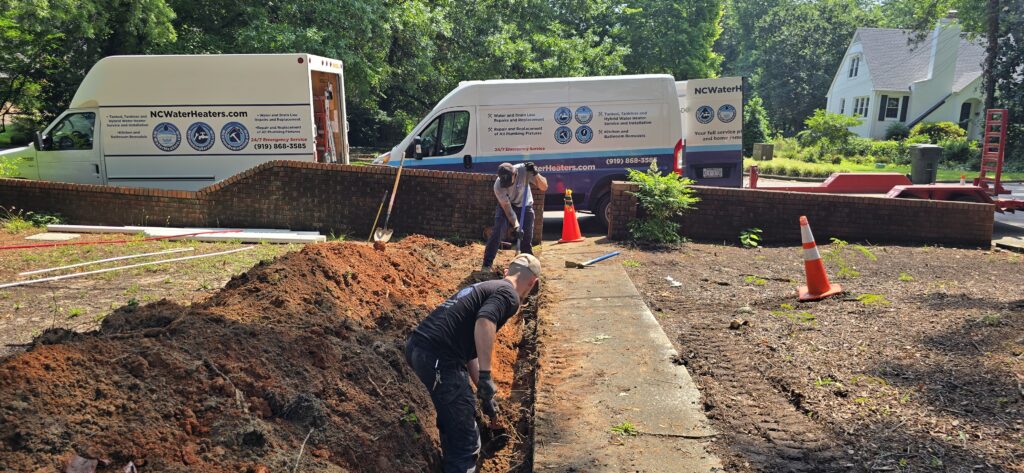
4. Excavation & Site Preparation
The type of excavation impacts both the timeline and the cost.
This may include:
- Hand-digging in tight or sensitive areas
- Machine excavation for deeper or long sections of pipe
- Protecting landscaping, fences, or driveways
- Removing tree roots or stabilizing the trench
The depth of drain lines can vary greatly. In some cases the trench depth may require additional support to prevent the walls of the trench from caving in or creating a dangerous work environment.
5. Removing the Damaged Pipe
Once exposed, the old section of pipe is removed. Common causes of failure include:
- Root intrusion
- Pipe collapse
- Settling or improper slope
- Corrosion (cast iron)
- Degraded materials (terracotta or clay pipe)
At this stage, the plumber confirms the length of the replacement needed and ensures the surrounding area is stable.
6. Installing the New Drain Line
A high-quality PVC drain line is installed with:
- Correct slope for proper drainage
- Code compliant bedding and backfill material
- Cleanouts where required
- Proper transitions if tying into older existing piping
Slope accuracy is critical, too steep or too shallow can cause future clogs or backups.
7. Inspection
Before the trench is fully backfilled, the installation is inspected by the local municipality. This ensures:
- Correct slope
- Approved materials
- Proper fittings and cleanouts
- Compliance with NC Plumbing Code
Only after passing inspection can final backfill occur.
8. Backfilling & Site Restoration
After inspection, the plumber:
- Backfills the trench in proper layers
- Compacts soil to prevent future sinking
- Restores grading to appropriate levels
If concrete, pavers, or driveways were involved, additional restoration may be needed.
What Contributes to the Cost of Drain Replacement?
Drain replacement costs can vary widely because every property is different. Key cost factors include:
1. Depth and Length of the Drain Line
- Deeper pipes require more labor and machinery
- Longer replacement sections increase material and labor costs
2. Soil Conditions
Rocky, compact, or root-heavy soil takes more time and equipment to excavate.
3. Utility Locates & Accessibility
Areas with gas lines, fiber, irrigation, or electrical obstacles require slower, more careful digging.
4. Location of the Drain Line
Is it under a lawn, driveway, porch, sidewalk, crawlspace, or interior slab? Hard-to-reach areas increase labor and may require specialty equipment.
5. Permits & Inspections
All municipal permits and inspections are factored into the project cost.
6. Pipe Materials & Length
PVC and approved fittings vary in price, and longer runs increase material cost.
7. Restoration Work
Costs may include:
- Landscaping
- Concrete or asphalt repair
- Sod replacement
- Crawlspace repair
- Tree root removal
8. Emergency Situations
After-hours or same-day emergency excavation naturally carries a higher cost.
Typical Cost Range for Drain Replacement in the Raleigh Area
While every situation is unique, most Raleigh-area homeowners can expect:
- Minor exterior drain repair: $1,500–$3,500
- Moderate excavation & replacement: $3,500–$8,000
- Full sewer line replacement: $7,000–$15,000+
- Under-slab or interior drain replacement: $8,000–$20,000+
The cost reflects labor, equipment, code requirements, utility locating, permits, inspections, and site restoration.
Choose a Licensed Professional for Drain Replacement
Drain replacements involve excavation, code compliance, safety risks, and precise installation. Hiring a licensed plumbing contractor protects your home and ensures your system is repaired correctly.
NCPlumbingServices.com provides professional drain inspections, replacements, and sewer line solutions across Raleigh, Cary, Apex, Holly Springs, and Wake Forest.
We handle everything from diagnosis, dig tickets, permits, excavation, installation, inspection, and cleanup with honesty and no unnecessary upsells.