



In this blog we will discuss The Hidden Danger in Your Walls: What Every Homeowner Needs to Know About Polybutylene Piping. If your home was built between the late 1970s and the mid-1990s, there is a good chance you are living with a potential plumbing disaster known as Polybutylene piping (often called “Poly B”).
For years, this material was hailed as the “pipe of the future” because it was cheap and easy to install. However, time has proven otherwise. At NCWaterHeaters and NCPlumbingServices, we want to ensure you have the facts about what is in your walls, the risks involved, and the only permanent solution to protect your home.
What is Polybutylene Piping?
Polybutylene is a form of plastic resin that was used extensively in the manufacture of water supply piping from 1978 until 1995. You can usually identify it by its appearance: it is typically gray (though sometimes blue or black) and is stamped with the code “PB2110.”
It was installed in up to 10 million homes across the United States and Canada. If you look under your sinks or at your water heater and see flexible gray pipes, you likely have Poly B.
Why Does Poly B Fail?
The problem with Polybutylene isn’t if it will fail, but when.
The failure is caused by a chemical reaction between the plastic piping and the oxidants (like chlorine) found in public water supplies. Over time, these chemicals cause the plastic to flake and become brittle from the inside out.
Because the degradation happens internally, the pipe can look perfectly fine on the outside right up until the moment it breaks. Failures typically occur in two ways:
Catastrophic Bursts: The pipe or fitting suddenly snaps, flooding your home with gallons of water per minute.
Pinhole Leaks: Small, undetected leaks behind drywall that cause black mold and structural rot long before you notice a wet spot.
The Only Real Solution: Replacement
Many homeowners ask if they can simply repair the section of pipe that is leaking. The answer is no.
Repairing a single section of Poly B is like putting a band-aid on a broken leg. The chemical degradation affects your entire plumbing system. Fixing one leak does not stop the next one from happening three feet away. The only way to guarantee that a Poly B leak won’t happen again is to completely remove the system and replace it.
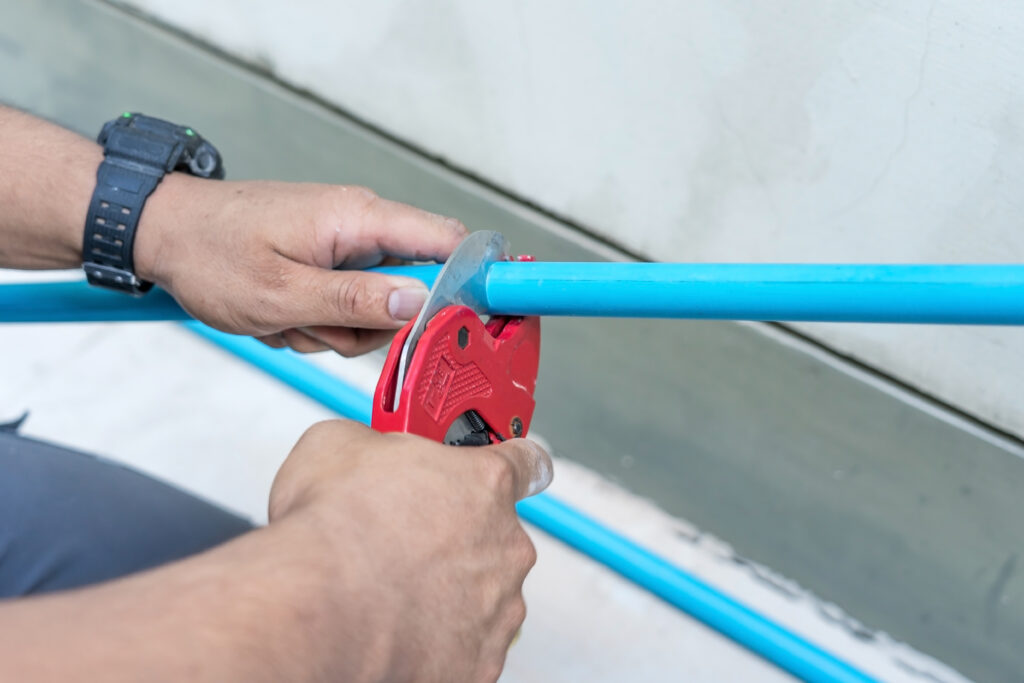
The Modern Standard: PEX Piping In most residential re-pipes, we use PEX (Cross-linked Polyethylene). PEX is the modern industry standard for a reason. It is highly durable, flexible, and resistant to the chemical reactions that destroyed Poly B. It provides a safe, long-lasting water supply system for your family.
The Insurance Reality Check
Ignoring Poly B piping can be a costly gamble regarding your homeowners insurance.
What IS covered: Generally, insurance will cover the damage caused by a sudden leak (flooring, furniture, drywall).
What IS NOT covered: Insurance typically does not cover the cost of the plumbing repair or the re-piping itself. You are responsible for the preventative maintenance of your home.
The Risk: Many insurance carriers are now refusing to insure homes with known Polybutylene piping, or they are significantly raising premiums and deductibles for these properties.
The “One-Stop-Shop” Advantage
We know what you are thinking: “Replacing all my pipes sounds like a nightmare that involves tearing up my walls.”
It is true that re-piping requires accessing the space behind your walls. In the past, you would have to hire a plumber to tear the walls open, and then hire a separate drywall contractor and painter to fix the mess.
NCWaterHeaters and NCPlumbingServices offers a better way.
We provide a Complete One-Stop-Shop Solution. We don’t just fix the plumbing; we handle the restoration, too. NCHomeRemodeling Home Repair Services
- Replace the plumbing with high-quality PEX.
- Repair the drywall professionally.
- Handle the painting to return your home to its original condition.
You deal with one company, one quote, and one team committed to respecting your home.
Don’t Wait for a Leak
Peace of mind is just a phone call away. If you suspect you have Polybutylene piping, do not wait for a burst pipe to force your hand. We hope you have learned about The Hidden Danger in Your Walls: What Every Homeowner Needs to Know About Polybutylene Piping. Read more about repiping.
NCWaterHeaters and NCPlumbingServices provide free estimates and consultations. We will assess your current system and provide a transparent plan to secure your home’s plumbing future.