

Portable Generators
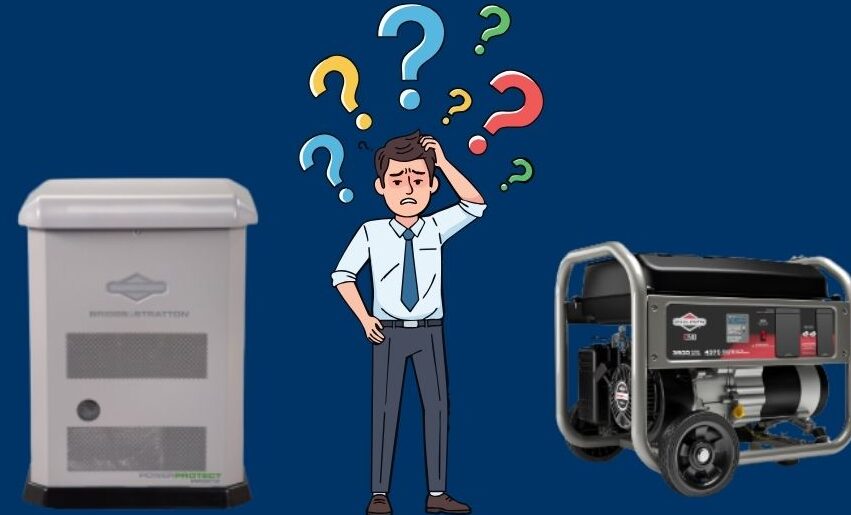
These generators are what most people will get in order to be prepared for any power outages. They will come in several different wattages. The right wattage depends on what you want to power with it. It’s worth noting that most portable units are not large enough to run large electrical loads like HVAC, ovens, water heaters, dryer etc. When connecting a generator to your home it is important to have it done by a licensed electrician. They will know the proper way to connect it and prevent any back feeding to the utility. There are two ways to connect these to your home’s electrical system.
Interlock Kit: What this is, is simply a manual device that will prevent the main breaker and the generator breaker from being on at the same time which prevents back feeding. This will allow the generator to power anything in your panel that you choose. Keep in mind the limits to the wattage from the generator itself.
Manual Transfer Switch: This is another great option and tends to be more user friendly to anyone in the home. A manual transfer switch is a back up panel that will allow you to choose 10 circuits that you would like backed up in an outage. These 10 circuits will then be connected to the transfer switch. During an outage you will just need to flip the switches in the transfer switch panel to connect them to the generator power.
Both of these connection methods will also require a generator inlet to be installed where you would like the generator to be when it is running. Somewhere outside the home away from windows and vents is best. This is to prevent the exhaust fumes from entering the home.
Standby Generators
The other type of generator would be a whole home standby generator. These generators will be connected to your home’s electrical system via an automatic transfer switch. Within a few seconds of an outage, the transfer switch will detect the outage, start the generator, and restore power to your home. The benefits to these generators are the fact that you can back up your entire home, including the large electrical loads that a portable generator won’t allow.
Standby generators, like the portable generators, have different wattages and the size you need will depend on:
Size of home and electrical loads: A licensed electrician will need to conduct a load calculation on your home to determine the size of generator needed for your entire home.
Number of circuits and appliances you want backed up: From this load calculation your electrician will sit down with you and figure out what is most important to have backed up, if you don’t want your entire home on the generator. The fewer loads needed means the smaller the generator will need to be. All of the circuits that will be on the generator will need to be moved to a new back up power breaker panel in order to isolate these during an outage
Standby generators will run off of propane or natural gas so this is another important thing to consider. If your home has propane, or doesn’t have natural gas connection, a minimum of a 500gal propane tank is needed for your generator.
Serving Raleigh, Cary, Apex, Holly Springs & Fuquay-Varina
If you have any questions about Portable vs Standby Generators and Which is Right for Your Home give us a call!
We also provide:
- Electrical panel upgrades
- Subpanel additions
- Circuit additions
- Dedicated EV charger circuits
- Whole-home safety inspections
- Breaker troubleshooting
- Surge protection installation
- Standby generator systems
Honest, no-pressure guidance. We only recommend what you need.
📞 919-868-3585 🌐 NCHomeElectric.com