




5 Kitchen Lighting Upgrades That Add Value
Lighting can completely change the way a kitchen looks, feels, and functions. While cabinets, countertops, and flooring often get the most attention during a kitchen remodel, lighting is one of the details that can make the entire space feel more polished, more comfortable, and more valuable.
The right kitchen lighting plan does more than brighten the room. It improves visibility, highlights design features, creates ambiance, and helps the kitchen feel intentional from morning coffee to evening entertaining. Whether you are planning a full kitchen remodel or looking for targeted upgrades that make a big impact, these are some of the kitchen lighting improvements that can add both beauty and value.
1. Dimmable Recessed LED Can Lights
Recessed LED can lights are one of the most practical and valuable kitchen lighting upgrades. When spaced properly, they provide consistent, even lighting throughout the kitchen without taking attention away from the design of the room.
The key is proper placement. Recessed lighting should be planned to cover the major work areas of the kitchen, including prep zones, walkways, the sink area, cooking areas, and open floor space. Poorly spaced lights can leave shadows, bright spots, or dark corners, which can make even a newly remodeled kitchen feel less functional.
Dimmable recessed LED lighting is especially useful because it allows the kitchen to shift throughout the day. Bright lighting is helpful when cooking, cleaning, or unloading groceries. Softer lighting creates a more relaxed feel during dinner, entertaining, or quiet evenings at home.
When planned correctly, recessed LED can lights provide a clean, updated look while improving the everyday usability of the space.
2. Pendant Lighting
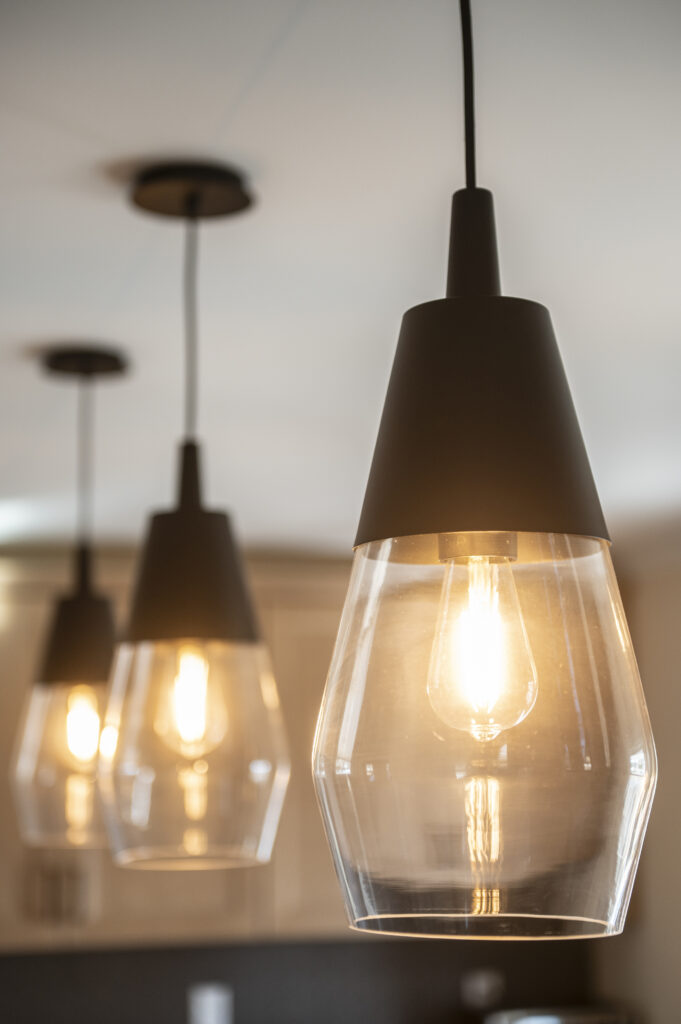
Pendant lighting is both functional and decorative, making it one of the most popular kitchen lighting upgrades. Pendants are often used over islands, peninsulas, breakfast bars, and sometimes over sinks. They help define the space while adding personality and style.
The type of pendant matters. In smaller kitchens or kitchens with lower ceilings, glass pendants are often a better choice because they do not visually block the room. Clear or lightly textured glass allows the eye to move through the space, helping the kitchen feel more open.
Solid fixtures can be beautiful, but in smaller spaces, they may interrupt the eyeline or make the room feel more crowded. This is especially important in open-concept kitchens where the lighting should complement the surrounding living or dining area.
Pendant lighting is also a great way to introduce a design element without overwhelming the kitchen. The right fixture can add warmth, texture, color, or a more custom feel to the finished space.
3. Undercabinet Lighting
Undercabinet lighting is one of those upgrades homeowners often do not realize they need until they have it. Once installed, it quickly becomes one of the most appreciated features in the kitchen.
Upper cabinets naturally create shadows on countertops. Without undercabinet lighting, prep areas can feel dim, especially in corners or along walls where recessed lighting may not fully reach. Undercabinet lighting solves that problem by placing light exactly where it is needed.
This upgrade is especially helpful for:
- Food prep
- Reading recipes
- Cleaning countertops
- Making coffee or snacks without turning on all overhead lights
- Highlighting backsplash tile and countertop selections
Undercabinet lighting also adds a finished, high-end feel to the kitchen. It helps eliminate dark corners and makes the entire space feel brighter, cleaner, and more intentional.
For many kitchens, this is one of the most practical lighting upgrades with one of the biggest visual impacts.
4. In-Cabinet Lighting for Glass Door Cabinets
If your kitchen includes cabinets with glass doors, in-cabinet lighting can instantly elevate the look of the room. This type of lighting highlights decorative dishes, glassware, serving pieces, or other display items while adding depth and warmth to the kitchen.
Glass cabinet doors already create a lighter, more open feel. Adding in-cabinet lighting takes that feature to the next level. It gives the kitchen a custom look and helps showcase the details that make the space feel personal.
In-cabinet lighting can work especially well in:
- Upper cabinets with glass doors
- Built-in beverage or coffee bars
- Butler’s pantry areas
- Display cabinets near dining spaces
- Accent cabinets on either side of a range hood or window
This is not just about brightness. It is about creating layers of light. When combined with recessed lighting, pendant lighting, and undercabinet lighting, in-cabinet lighting helps create a kitchen that feels warm, finished, and thoughtfully designed.
5. Toe-Kick Lighting
Toe-kick lighting is a small detail that can make a kitchen feel much more custom. Installed near the base of the cabinets, this lighting adds a soft glow along the floor and helps define the shape of the room.
While toe-kick lighting is not always necessary, it can absolutely level up the space. It is especially effective in kitchens with islands, darker cabinetry, or open floor plans where soft evening lighting adds ambiance.
Toe-kick lighting can be useful for:
- Soft nighttime lighting
- Added ambiance during entertaining
- Highlighting cabinet lines and island details
- Creating a more upscale, finished look
This upgrade is subtle, but that is part of its appeal. It adds a sense of polish without being too obvious.
Coordinate the Lighting Hue
One of the most important details in a kitchen lighting plan is the lighting hue, also known as color temperature. Even beautiful fixtures can feel wrong if the light color is too harsh or inconsistent.
For most kitchens, a warmer light temperature in the 2700K to 3000K range creates a more comfortable and inviting feel. This range provides warmth without making the room feel yellow or dim.
Lighting that is 3500K or higher can sometimes feel harsh, especially in residential kitchens. Higher color temperatures may create a cooler, brighter appearance, but they can also make the space feel less welcoming.
It is also important to coordinate the hue across the different lighting types. Recessed lights, pendants, undercabinet lights, and in-cabinet lighting should work together rather than compete with one another. Mismatched lighting temperatures can make the kitchen feel disjointed, even when the finishes are beautiful.
A coordinated lighting plan helps the kitchen feel calm, cohesive, and professionally designed.
Consider Dimmers and Smart Lighting Controls
Dimmers are one of the easiest ways to make kitchen lighting more flexible. A kitchen needs different levels of light at different times of day, and dimmers allow homeowners to adjust the mood without changing the fixtures.
Bright lighting may be best for cooking and cleaning. Softer lighting may be preferred for dinner, entertaining, or winding down in the evening.
Smart lighting controls and apps can make this even easier. Depending on the setup, homeowners may be able to adjust lighting levels, create scenes, schedule lights, or control specific zones from a phone or smart home device.
For example, you may want:
- Bright task lighting for meal prep
- Soft pendant lighting for dinner
- Undercabinet lighting for evening ambiance
- Toe-kick lighting for nighttime visibility
- A preset “entertaining” scene for guests
These details add convenience and help the kitchen feel more modern and customized.
Why Kitchen Lighting Adds Value
Kitchen lighting adds value because it improves both function and appearance. A well-lit kitchen feels larger, cleaner, and more enjoyable to use. It also helps highlight the investment made in cabinets, countertops, tile, flooring, and fixtures.
When buyers or guests walk into a kitchen, lighting affects the first impression immediately. A kitchen with layered, coordinated lighting feels more updated and more thoughtfully designed than one with a single overhead fixture or poorly placed lights.
The best kitchen lighting plans usually include a combination of:
- General lighting
- Task lighting
- Accent lighting
- Decorative lighting
- Smart or dimmable controls
Together, these layers create a kitchen that works beautifully for everyday use while also feeling warm and inviting.
Kitchen Lighting Upgrades with NC Home Remodeling
A successful kitchen remodel is about more than selecting beautiful finishes. It is about making sure the space works well, feels comfortable, and supports the way you live every day. Lighting plays a major role in that experience.
At NC Home Remodeling, our in-house team can help plan kitchen upgrades that include design, GC led project management, licensed electrical and plumbing, carpentry, and remodeling details. From recessed lighting and pendant placement to undercabinet lighting and smart controls, the details matter.
If you are planning a kitchen remodel in Raleigh, Cary, Apex, Holly Springs, Fuquay-Varina, or the surrounding area, thoughtful lighting upgrades can help your kitchen feel brighter, more functional, and more valuable.
NCHomeRemodeling.com is a division of NCWaterHeaters.com providing plumbing, electrical, and home remodeling services to homeowners in the Raleigh, NC area. From a simple service call to a major project, our licensed trade professionals can repair and create your dream spaces. Give us a call today at (919) 868-3585.